Art of the World Gallery presents Inner Landscapes, the second exhibition at the gallery by Colombian contemporary artist Aníbal Vallejo. Bringing together recent paintings, the exhibition considers the intimate relationship between the spaces we inhabit and the emotional lives that unfold within them. Through an interplay of figures, domestic objects, textiles, and still life, Vallejo transforms familiar surroundings into compositions of psychological depth and quiet contemplation.
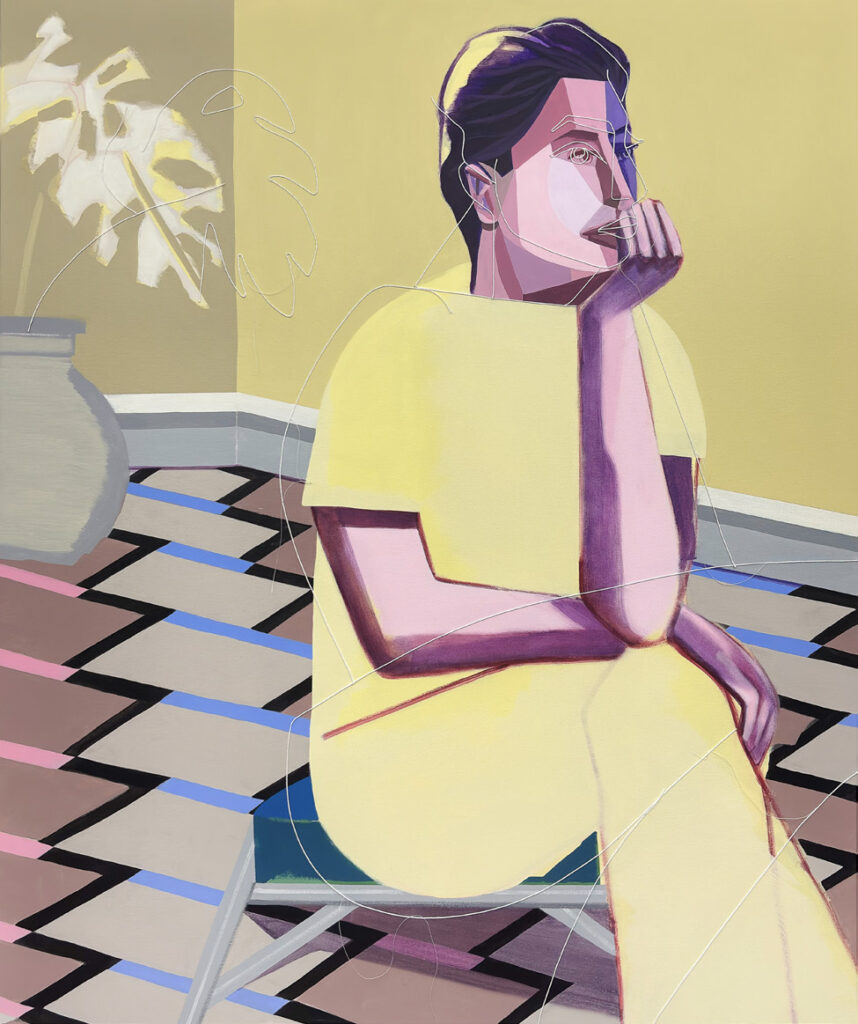
In Vallejo’s paintings, the domestic interior is not merely a backdrop for human experience; it is one of the means through which that experience takes shape. Figures, furniture, patterned textiles, plants, and animals occupy a shared pictorial space, each retaining a distinct presence while contributing to a carefully balanced whole. A human figure may carry no greater visual weight than an armchair; a patterned textile may possess the expressive force of a portrait; and a modest arrangement of fruit or glass vessels may become a focal point in its own right. Through this equilibrium, Vallejo challenges familiar hierarchies of attention and
reveals the complexity held within everyday surroundings.
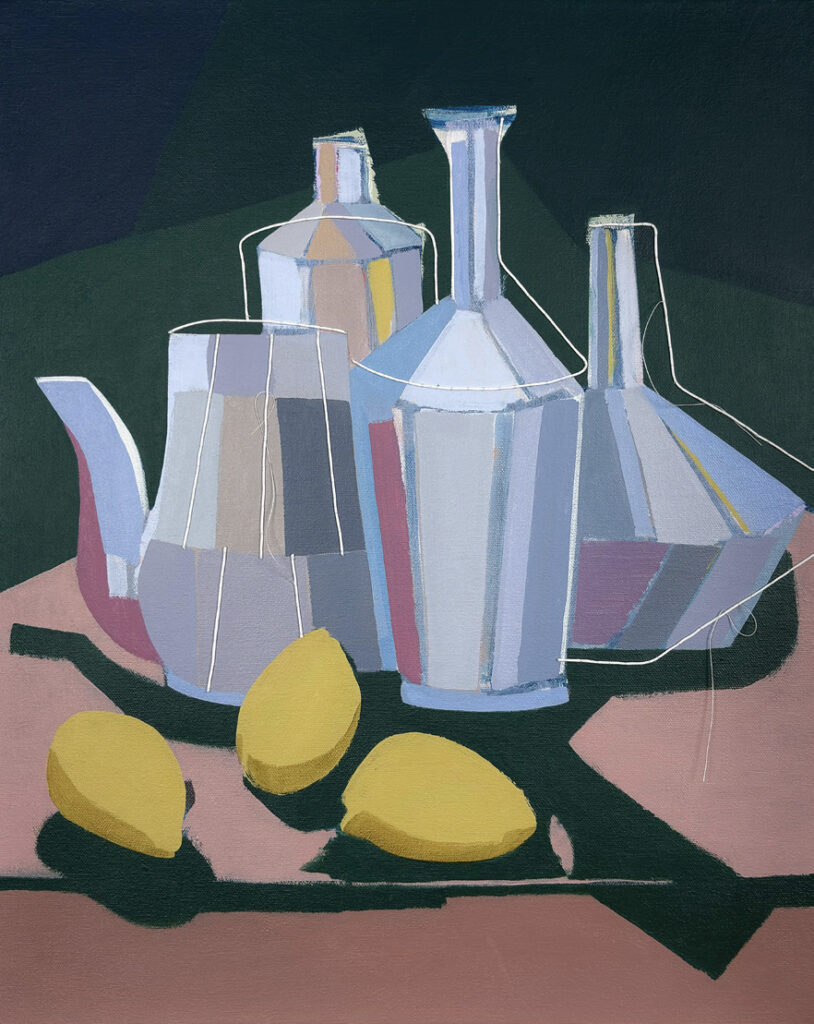
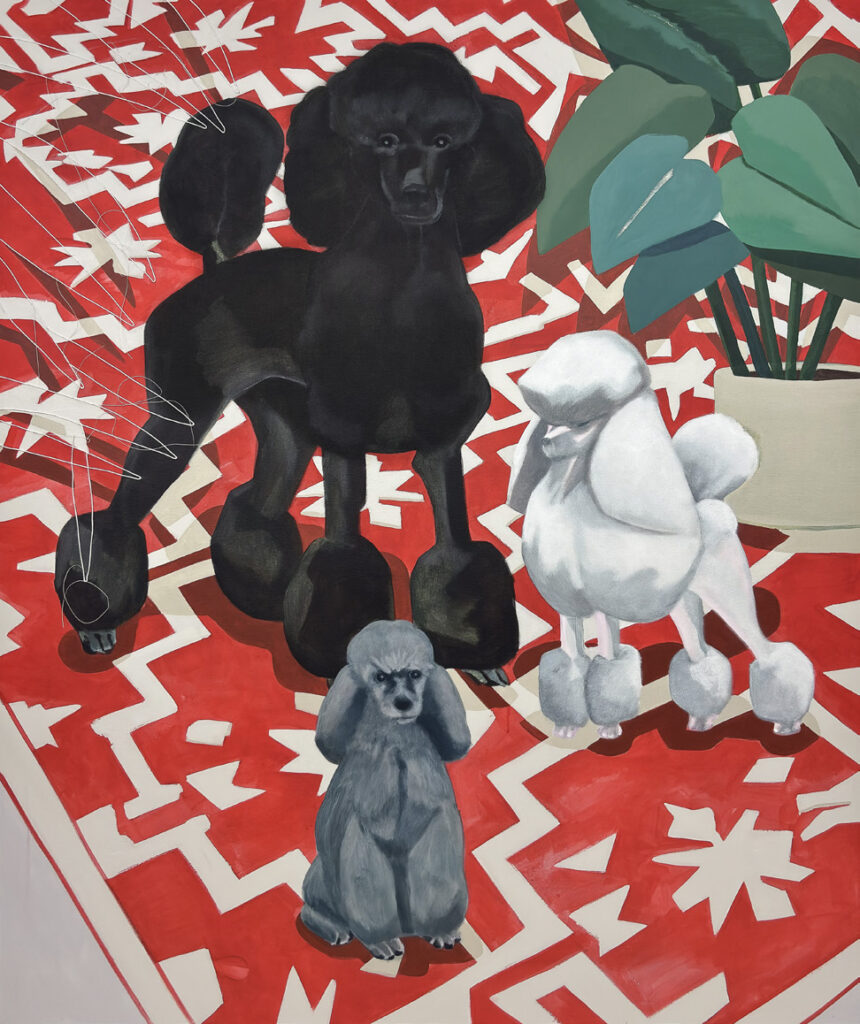
The paintings invite art-historical affinities with Giorgio Morandi, Georges Braque, and Pablo Picasso, whose practices expanded the possibilities of representing familiar subjects. Vallejo engages the traditions of portraiture, interior painting, and still life without treating them as fixed formulas. Instead, he reconsiders these genres through a contemporary sensibility, using color, pattern, materiality, and spatial relationships to create compositions that remain open to multiple interpretations.
“To inhabit a space is also to be shaped by it,” observes the exhibition’s curatorial text. “The domestic is less a subject than a condition […] constructed not through distant vistas, but through relationships. The
landscape is made from what surrounds us and from the ways in which bodies and things coexist.”
Still life occupies a central place in the exhibition. Vessels, glassware, and fruit are neither incidental details nor decorative accompaniments; they command attention through their material presence and quiet familiarity. They evoke the traces of daily rituals, the accumulation of memory through use, and the passage of time. Vallejo slows the act of recognition, encouraging viewers to look beyond an object’s identity and consider the associations and sensations it may hold.
The human figures are similarly resistant to straightforward interpretation. Though not literal self-portraits, they suggest an intimate mode of observation in which the external world and the consciousness that perceives it remain closely entwined. Ambiguity gives viewers room to bring their own memories and associations to the work. A familiar room, an everyday object, or a quiet gesture may gradually disclose the less tangible atmosphere of a remembered place or the emotional complexity of simply being present.
With Inner Landscapes, Vallejo turns attention toward the subtle relationships through which our surroundings acquire meaning. His paintings propose that landscape need not be defined by a distant horizon; it may be found in the rooms we inhabit, the objects we live alongside, and the attention through which the familiar becomes newly visible.